

RenderCon 2026 brought together artists, filmmakers, AI developers, researchers, and infrastructure builders working at the intersection of media, AI, and decentralized compute.
Across two days and 23 sessions, one theme emerged repeatedly: compute infrastructure is becoming foundational to modern AI workflows.
During the Dispersed builder case study sessions, developers demonstrated how they’re already using distributed GPU infrastructure to power real-world applications spanning scientific research, AI memory systems, satellite intelligence, generative art, and autonomous AI agents.
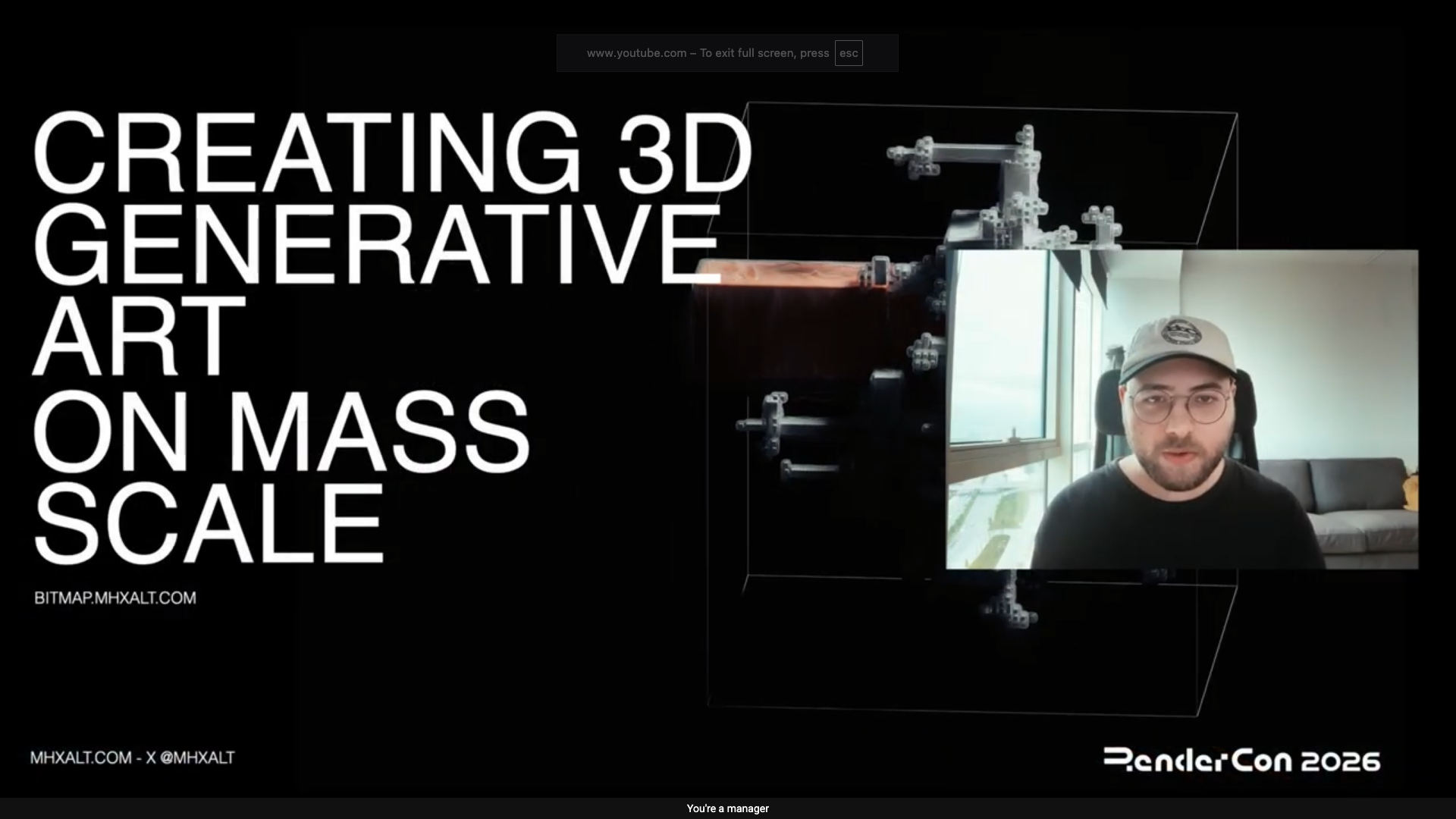
Motion Designer, Director, and Generative Artist MHX presented Bitmap, a project visualizing one Bitcoin block every 24 hours. The project combines blockchain data interpretation with large-scale visual generation workflows that required significant computational resources beyond what local hardware could realistically support.
By leveraging both Render Network and Dispersed, MHX was able to tackle not only rendering workloads, but also the compute-intensive processing needed to interpret and transform blockchain data into visual outputs.
Watch the session:
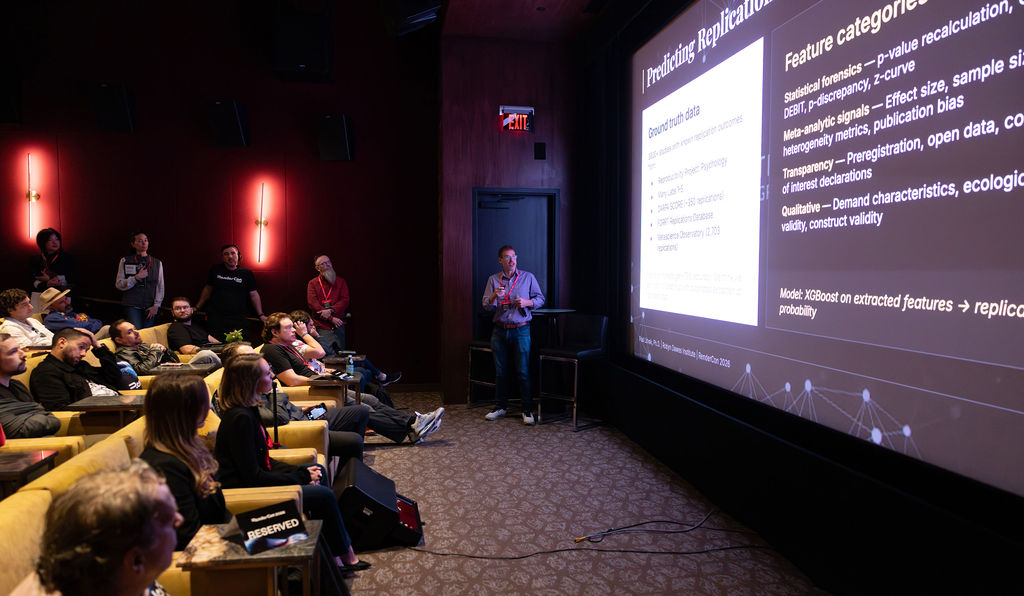
Paul Litvak, Founder and Executive Director of the Robyn Dawes Institute, showcased evidence.guide, a large-scale analysis pipeline designed to evaluate scientific research across hundreds of academic papers. The system converts PDFs into structured datasets, extracts statistical findings, and runs meta-science diagnostics intended to assess the replicability of published studies.
The project highlights how distributed compute infrastructure can support large-scale analytical workloads well beyond traditional AI generation or rendering applications.
Watch the session:
Avia Kraft, CEO of CorpusPark, demonstrated OrbitRisk, a predictive satellite risk intelligence platform developed on Dispersed.
OrbitRisk combines live environmental inputs, orbital mechanics modeling, collision probability analysis, and cybersecurity signals to generate dynamic risk profiles for satellite operators and insurers.
As orbital environments become increasingly congested, the ability to process multiple live data streams and generate forward-looking operational insights becomes computationally intensive — making scalable GPU infrastructure increasingly important.

Watch the session:
Hannah Barris, CEO of Omniscient Inc., presented a decentralized AI memory layer designed to transform stateless AI tools into persistent, personalized systems.
Built using composable infrastructure including Manifest Network and Dispersed, Omniscient aggregates user-owned data into a continuously evolving context engine intended to preserve privacy, portability, and user sovereignty.
The system leverages decentralized compute infrastructure to support containerized workloads across providers while avoiding centralized dependency.

Watch the session:
Jon Gutwillig of Manifest Network, in partnership with Sarson Funds, demonstrated a decentralized infrastructure model where AI applications dynamically access distributed GPU resources in real time.
Applications including Agent1 and Suma orchestrate multiple GPU tasks per query, selecting the most cost-efficient hardware for inference, embeddings, and analysis across networks.
The broader concept reframes compute infrastructure as an on-demand resource layer that AI systems can access programmatically.
In other words: AI agents hiring GPUs dynamically based on task requirements.

Watch the session:
Manifest Network & Sarson Funds
One of the clearest takeaways from the RenderCon case studies was the breadth of applications emerging on distributed GPU infrastructure.
The showcased projects spanned:
What connects them is the growing need for scalable compute that can expand dynamically as workloads evolve.
Distributed GPU infrastructure is increasingly becoming part of the foundation for modern AI systems.


