
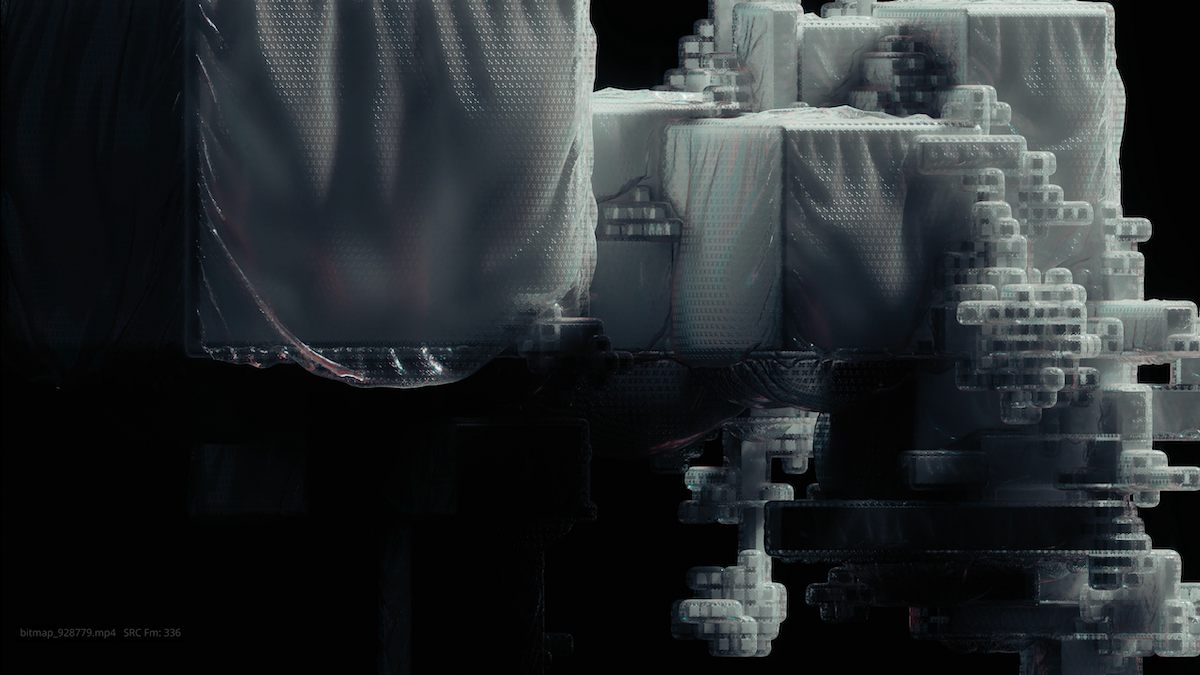
At first glance, a Bitcoin block, capped at a mere 4MB of ledger data, seems computationally trivial. Yet, transforming that raw metadata into high-fidelity, procedurally generated 3D art requires an immense amount of computational power. For digital artist MHX, this was the central bottleneck of the Bitmap project: visualizing the complex architecture of one Bitcoin block every 24 hours wasn’t just a data interpretation challenge, it was computationally infeasible on local hardware.
The solution lay in a hybrid decentralized architecture. MHX utilized Dispersed, the Compute Subnet by Render Network, to oversee the heavy thinking (running the complex algorithms that generate the geometry) while leveraging the Render Network API to handle the final video rendering. The impact was immediate: what would have been a 35-hour process tying up his local workstation became a fully automated 15-minute workflow running daily on reliable cloud infrastructure—freeing MHX to focus on creative work rather than managing servers. This workflow allows the artist to operate entirely within the realm of logic and design, while the network provides the raw muscle necessary to execute his most expansive visions in real-time.
Muhammet Altun, professionally known as MHX, is a veteran 3D artist and motion designer from Istanbul with over 12 years of industry experience. He has primarily worked as a 3D generalist, creating high-end commercials, title sequences, and experimental motion design pieces. More recently, however, his focus has shifted toward procedural, data-driven art—a discipline where the artist acts less like a painter and more like an architect.
MHX works exclusively in SideFX Houdini, a tool he describes not just as software, but as a "wide-open operating system" for creative logic. While he previously utilized Cinema 4D—a powerhouse for high-end motion design—he found that his specific need for raw, chaotic data ingestion required the node-based architecture of Houdini. For rendering, he uses OctaneRender, a GPU-accelerated, unbiased, physically correct renderer that translates Houdini’s procedurally generated geometry into high definition visuals.
To execute these complex ideas, MHX relies on containerization—packaging his entire software environment into a portable "digital studio" that can run on any machine, anywhere. The more MHX worked with Houdini, the more he realized the power it has to use raw data and algorithms to create unique visual elements. It works as a transactional system where raw data is ingested, mathematically manipulated, and transmuted into visual output. It is the same engine NASA uses to visualize telescope data and medical researchers use to simulate protein folding; for MHX, it is the only tool capable of handling the complexity of the chaotic crypto ecosystem.
Unlike traditional 3D artists who might agonize over the manual placement of every vertex or light source, MHX approaches art with the mindset of an architect. "I have never been a 'crafty' person," MHX admits. "I’ve always preferred making computers do things for me." He doesn't want to build the house brick-by-brick; he wants to design the blueprint and let the machine handle the construction.
This systems thinking philosophy shaped his most ambitious projects: Zen Blocks, LATTICE, and most recently, Bitmap.
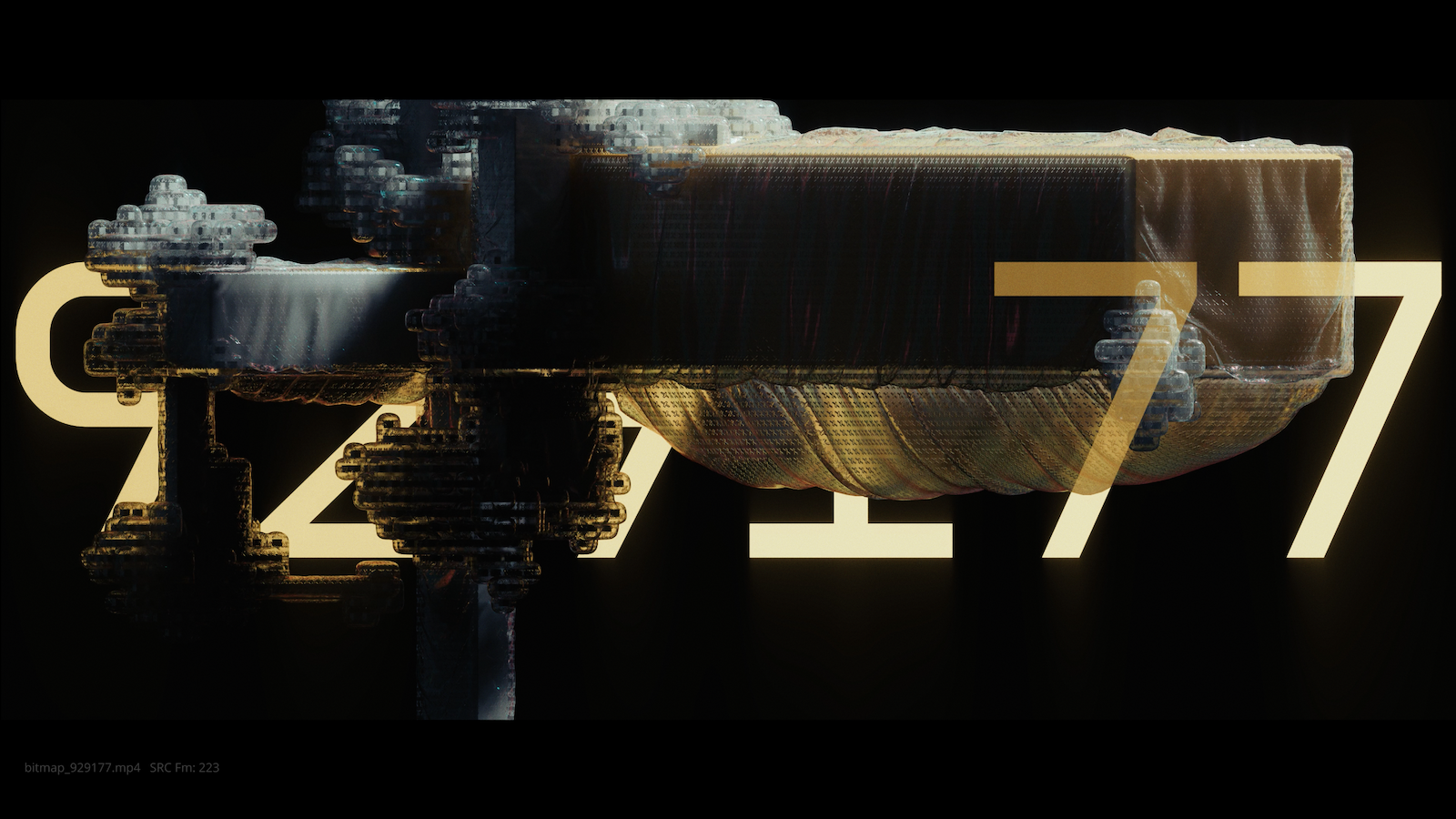
Bitmap is a fully autonomous 3D art generator that mirrors the complexity of blockchain technology. Every 24 hours, the system randomly selects a Bitcoin block from the previous day, ingests its transaction data, and procedurally constructs a unique, animated "data sculpture" that reflects the financial activity of that specific moment in time.
For MHX, the decision to use the Bitcoin blockchain as his muse was both technical and philosophical. While the blockchain provided a massive, high-quality public dataset, he was also drawn to the human narrative hidden in the ledger. To MHX, the blockchain isn't just cold financial data; every block is a snapshot of thousands of human decisions, trades, and interactions frozen in time.
To translate these transactions into art, MHX designed a set of procedural rules that allow the sculpture to evolve organically:
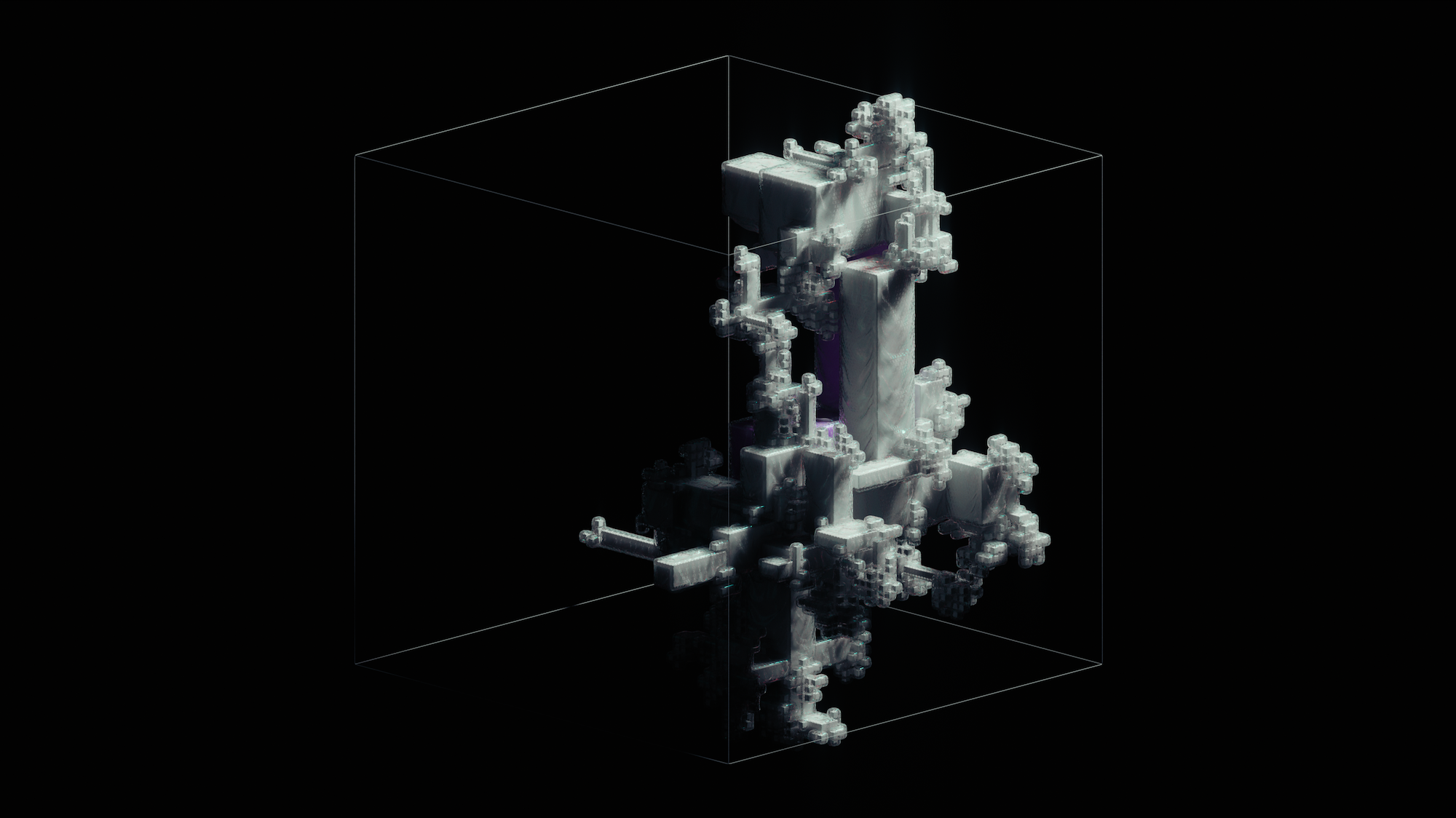
It’s like growing a 3D data tree. The largest, most important pieces form the core, and smaller pieces find empty slots to latch onto around the outside, creating a tight, non-overlapping cluster.
On the surface, a Bitcoin block seems trivial. Capped at roughly 4MB, the file size is approximately that of a single high-quality JPEG. However, this small package acts as a "high-density seed" that is algorithmically grown to many times its original size. A single block contains an average of 3,000 unique transactions; to visualize them, the system must parse that raw metadata and expand it into a complex 3D sculpture containing thousands of individual cuboids. This creates a data-intensive bottleneck that results in massive processing overhead from a relatively tiny input.
The ultimate goal for Bitmap was to function as a self-sustaining machine for a full year without manual intervention or error. However, MHX hit three distinct walls:
While Render Network is a premier decentralized platform for visualizing 3D scenes, the Bitmap project required a more generalized compute platform. The standard network renders final frames, but it cannot run the procedural algorithms required to build the world itself. In addition to the distributed rendering power provided by Render Network, MHX needed raw compute power without the IT overhead endemic to solutions like AWS. Enter Dispersed.
Dispersed is a decentralized compute layer built by the same people behind Render Network. While the core Render Network is optimized for "rendering"—the process of turning 3D data into pixels—Dispersed is designed for "compute." It allows artists to tap into a global network of high-performance GPUs to execute complex logic, simulations, and algorithmic tasks. Essentially, it provides the "brain" for the project, while the rendering network provides the "eyes."
By using Dispersed, MHX was able to offload the daily compute workload to reliable cloud infrastructure without the DevOps overhead of traditional cloud platforms. Dispersed provides on-demand nodes with configurable specs while not requiring him to manually provision or manage the underlying infrastructure. Most critically, because the Dispersed network of nodes is always available, the system can be triggered to run reliably at the same time every day with no local workstation involved and no manual intervention needed.
The Dispersed node executes MHX's Houdini pipeline, which handles the algorithmic work of constructing the 3D sculpture. Once complete, his application code automatically sends the finished geometry to the Render Network API for parallel frame generation. This architecture (reliable compute on Dispersed combined with distributed parallel rendering on Render Network) collapsed the generation time from 35 hours to just 15 minutes. It eliminated the need for MHX to manage infrastructure or sacrifice his workstation for the project. The system launched January 1st, 2026, and has been running autonomously ever since, producing one sculpture daily.
Unlike traditional cloud platforms like AWS that require extensive DevOps setup, Dispersed provides on-demand GPU compute with minimal setup. MHX simply packages his Houdini environment and application code into a Docker image. Then, his code handles the workflow logic—generating geometry on Dispersed nodes, then sending the results to the Render Network API for final rendering—while Dispersed provides the raw compute power when needed, then shuts down when complete.
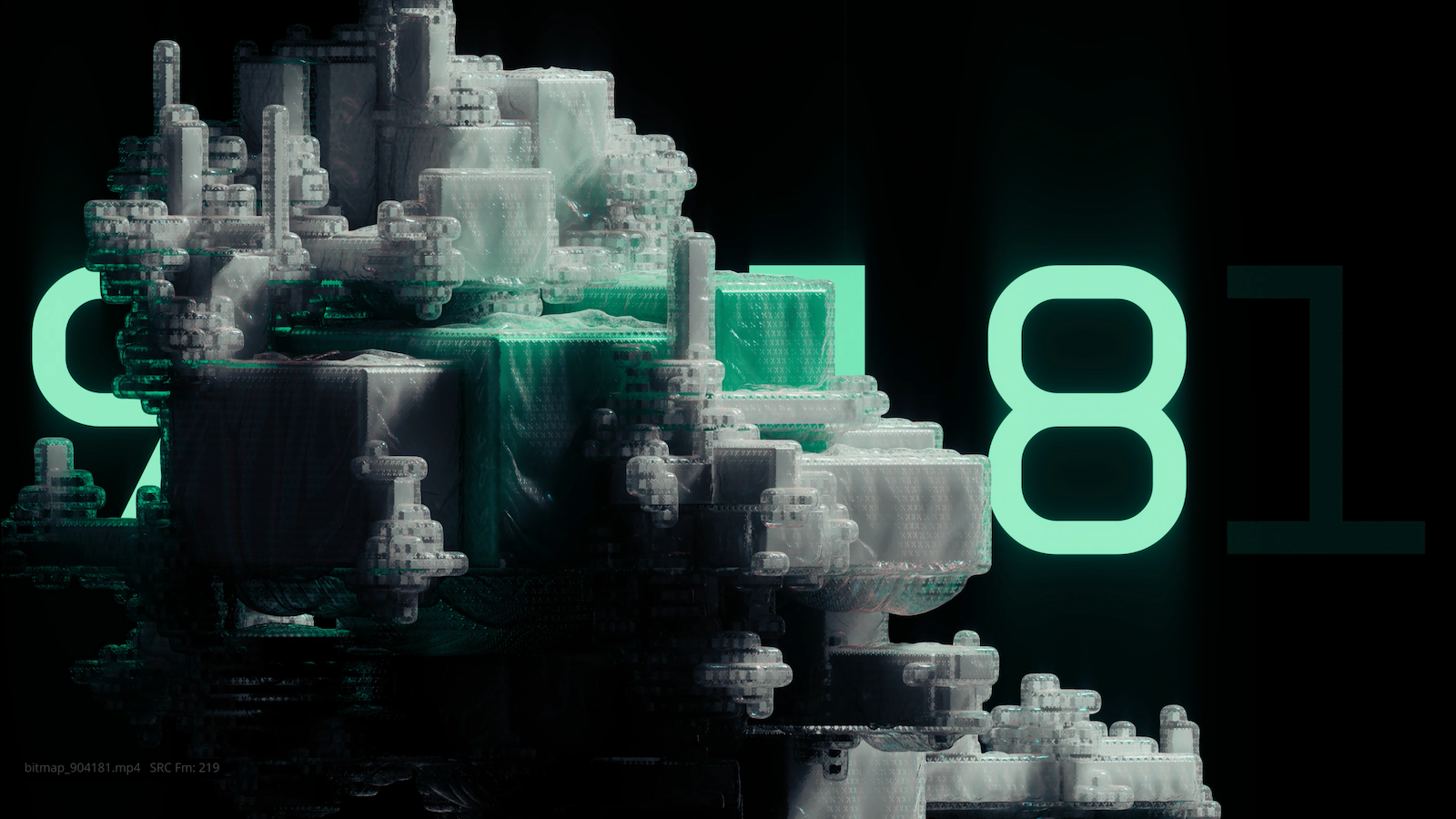
“Dispersed offers a robust environment for containerized systems,” MHX explains. “I created a Docker image with Houdini and Octane, and I had 1:1 parity between my local environment and the Dispersed nodes. This makes testing and deploying very smooth once you encapsulate your tools in a Docker image.”
For a project requiring daily execution at a specific time, reliability is paramount. Dispersed's managed infrastructure ensures the Bitmap system runs consistently without the fragility of a home workstation setup–no power outages, hardware failures, or competing workloads to disrupt the generation cycle.
Beyond operational simplicity, Dispersed offers significant cost advantages. MHX estimates the compute costs at approximately a few cents per sculpture on Dispersed, compared to roughly $8 per piece on traditional cloud platforms like AWS or Cloudflare—a reduction of over 95%. While rendering costs are separate, the dramatic compute savings make daily autonomous generation economically sustainable for long-running generative art projects.
The Result: A seamless, "Plug-and-Play" autonomous digital art factory where the Dispersed subnet handles the logic and feeds the results directly to the Render API.
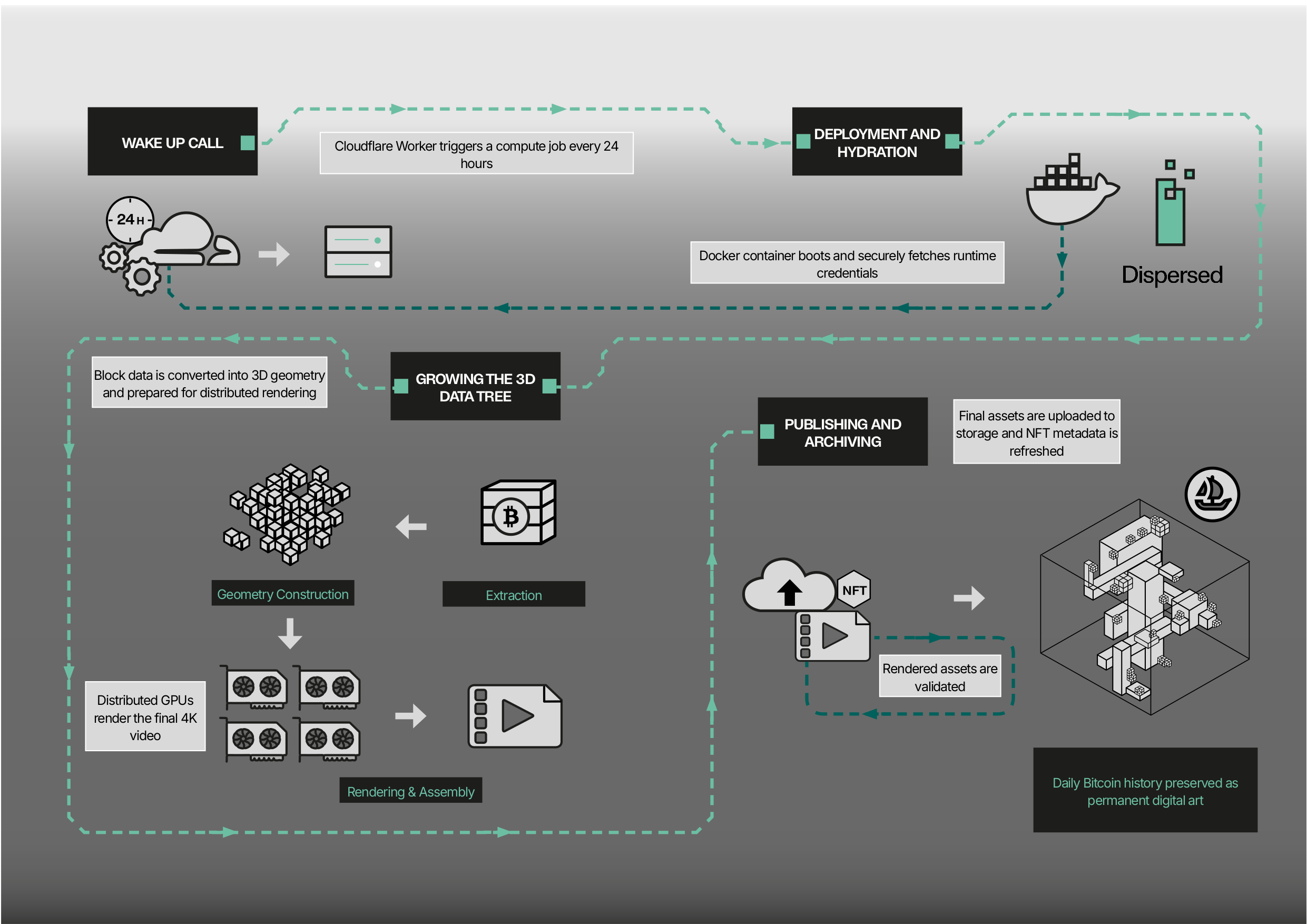
To turn the financial metadata of a Bitcoin block into tangible art, MHX built a fully automated pipeline that wakes up, builds a piece of art, then shuts down, all without human intervention. Here is the step-by-step lifecycle of a Bitmap sculpture:
1. The Wake-Up Call (Cloudflare) The process begins with a "Watchman": a lightweight Cloudflare Worker script that runs 24/7. Every 24 hours, the script wakes up and submits a signed job request to the Dispersed API, specifying the hardware requirements for the render node — 16 CPUs, 1 GPU, 32GB RAM, and 16GB of VRAM. The Worker passes a single authorization token to the node, effectively hiring the Docker container and giving it the badge it needs to access the secure facility.
2. Deployment & Hydration (Dispersed) Once triggered, the Dispersed API instantly clones MHX's Docker container on its network. Booting the container automatically launches the render.py script, which uses the authorization token to call back to the Cloudflare Worker to fetch credentials it needs. This includes tokens for Telegram (used to send MHX project status notifications) and OpenSea (the NFT marketplace where each sculpture is displayed) ensuring no sensitive data is ever permanently stored in the Docker image itself.
3: Growing the 3D Data Tree (Houdini PDG) With the environment fully configured, control is handed to Houdini, where PDG (Procedural Dependency Graph) takes over as orchestrator for the entire generative and rendering process.
4: Publishing and Archiving (render.py + Cloudflare R2) With the video complete, control returns to the render.py script, which handles everything required to publish the day's sculpture as a permanent asset.
This systems-oriented approach extends to MHX’s use of AI tooling. A crucial distinction in the Bitmap project is the role of Artificial Intelligence. The art itself is entirely procedural—the 3D structures are born from algorithmic rules that MHX designed over months, not from the probabilistic interpretations of a Large Language Model (LLM). In this sense, Bitmap is not “AI Art.”
However, AI plays a critical supporting role in the infrastructure. “I am very into creating my own automation systems, and that sometimes involves AI writing some code for me,” MHX notes. The complex web of Python scripts, Docker files, and API calls that keep the Bitmap factory running were created with the help of LLMs. This is AI as a development tool, not as a creative collaborator. As MHX emphasizes, his creative workflow is “a manual process that AI can’t be included in, and takes months of crafting and refining data mappings and visual details.”
Looking forward, this "AI-as-Engineer" model points toward a future of Agentic Workflows. As protocols like MCP (Model Context Protocol) mature, the "Chat" interface will disappear. Instead of copying code snippets from a chatbot to a terminal, artists like MHX will likely deploy autonomous AI Agents to act as the maintenance crew for their digital factories—optimizing pipelines, debugging server errors, and managing Dispersed nodes—leaving the human artist free to focus entirely on the design of the system itself.
“Dispersed opens up new possibilities for scaling compute for 3D generative art and high-end production that were not feasible before,” MHX states. “Running jobs on a decentralized compute layer allows art to evolve and re-generate continuously without being constrained by traditional compute limits.”
For Bitmap, the use of decentralized compute wasn't just a convenience; it was a necessary collapse of the production clock. On a standard high-end local workstation, procedurally expanding a single Bitcoin block’s metadata into a 4K 3D sculpture would take approximately 35 hours. By offloading the compute workload to the Dispersed subnet and the rendering to the Render Network API, MHX reduced that total processing time to just 15 minutes.
This radical speed increase solved the project’s most critical requirement: uninterrupted daily execution. Because the 35-hour local render cycle exceeded the 24-hour daily mission window, the project was mathematically impossible on a home workstation. It would have fallen further behind the production schedule every day. By reducing the cycle to 15 minutes, MHX transformed Bitmap from a workstation-crippling task into an autonomous, 24/7 “digital art factory” that functions independently of the artist’s physical hardware.
While traditional cloud platforms like AWS and Azure could theoretically solve the speed problem, they would introduce a different barrier: cost at scale. Because Dispersed consists of a network of independent node operators rather than infrastructure owned by a single provider, it removes an intermediary layer that typically drives up pricing. For an independent artist running a compute-intensive job every day for a full year, it means the difference between a project that is financially viable and one that never gets built.
With the infrastructure now proven, MHX sees this as a blueprint for a new class of generative systems, one that is within the grasp of independent artists:
“One of the purposes of the Bitmap project was to explore all the ways I can use decentralized compute nodes to create otherwise impossible artworks. I’ve been studying this workflow for the last few years, and Dispersed was the last missing piece for me to be able to deploy all kinds of 3D generative artworks that require heavy compute.”
As of February 5th, the Bitmap system has been running continuously since its January 1st launch, autonomously generating and publishing one unique Bitcoin block visualization daily, exactly as it was designed to do. The infrastructure has required no manual intervention, proving the reliability of the Dispersed + Render Network architecture for long-running generative art projects.
The Bitmap project represents a fundamental shift in the relationship between the artist, the algorithm, and the infrastructure. For an artist who thinks in systems rather than single images, Dispersed acts as an orchestrator for producing artworks in large quantities and a reliable compute layer for heavy processes and simulations.
By removing the "hardware wall," the decentralized network changes the nature of the creative process itself. As MHX notes: “Dispersed allows me to focus on crafting and refining generative systems instead of worrying about compounding compute times.”
In a traditional workflow, high-resolution 4K output often requires compromising on the complexity of the underlying math or the frequency of the iterations. By leveraging the parallel power of Render Network, MHX was able to maintain the highest fidelity for a high-stakes, 365-day series without technical concessions.
Ultimately, Dispersed provided the compute scale necessary for this project, making it possible for MHX to create art as big as his imagination without sacrificing the quality and resolution of the final product. As generative art continues to move toward more complex, data-driven simulations, the Bitmap project stands as proof that the "last missing piece" of the puzzle – infinite, reliable, and accessible compute – has finally arrived.
Ready to create your own generative art? Start here with our guide to building automated workflows using Dispersed and Render Network.
Building apps, not art? Start here to explore the Dispersed API and learn how to run your computational workloads on the Dispersed distributed GPU network.


